The Complete Guide to Craft Storage for Etsy Sellers
Jul 08, 2026


Find your Smart Storage™ unit.
We have locations across the United States providing onsite StoreEase Virtual Customer Service™ and 2 Minute Move In® contactless rental.
We have locations across the United States providing onsite StoreEase Virtual Customer Service™ and 2 Minute Move In® contactless rental.


Your craft supplies have taken over the spare room, the dining table, and maybe a closet or two. If you sell on Etsy or make things on the side, growth is a good sign, but it also means your workspace can't keep up. A dedicated craft storage unit gives your fabric, paper, tools, and finished inventory a clean, organized home. That means your house can go back to being a house.
At StoreEase, we make rentals fast and simple, and we help creators just like you expand their business, protect their supplies, and maintain their sanity. Here's how to set up craft storage that protects your materials and keeps your shop running smoothly all year.
A craft storage unit works best when you treat it as an extension of your studio, not a junk drawer for overflow. Most crafters reach a tipping point. The fabric stash spills out of the closet, the bead organizers stack three deep, and finished orders have nowhere to live until they ship. For Etsy sellers, small crafting businesses, and serious hobby enthusiasts, that crowding starts to slow you down and add stress to work that's supposed to be fun. Renting a small unit nearby gives you room to sort materials by project, set up shelving, and keep your home for living instead of storing.
Reclaiming that space does more than tidy the house. It gives your creative work a real workflow, where supplies, projects, and inventory each have a place. You stop losing an hour hunting for the right thread or sheet of cardstock, and you stop apologizing for the boxes in the hallway.
Hobby and craft storage units come in a range of sizes, so you don't have to pay for space you won't use. A 5x5 or 5x10 handles supplies and a few bins of inventory, while a 10x10 gives you room for shelving and a small worktable. If you're not sure what fits, our unit size guide walks you through it based on what you plan to store. Start a little larger than you think you need, since craft supplies tend to grow with your shop.
The right setup depends on what you make, since fabric, paper, wood, and small goods each ask for a different approach. A one-size system leaves you digging through bins for the one thing you need. A setup built around your craft keeps everything findable, protected, and ready to use the moment inspiration or an order arrives.
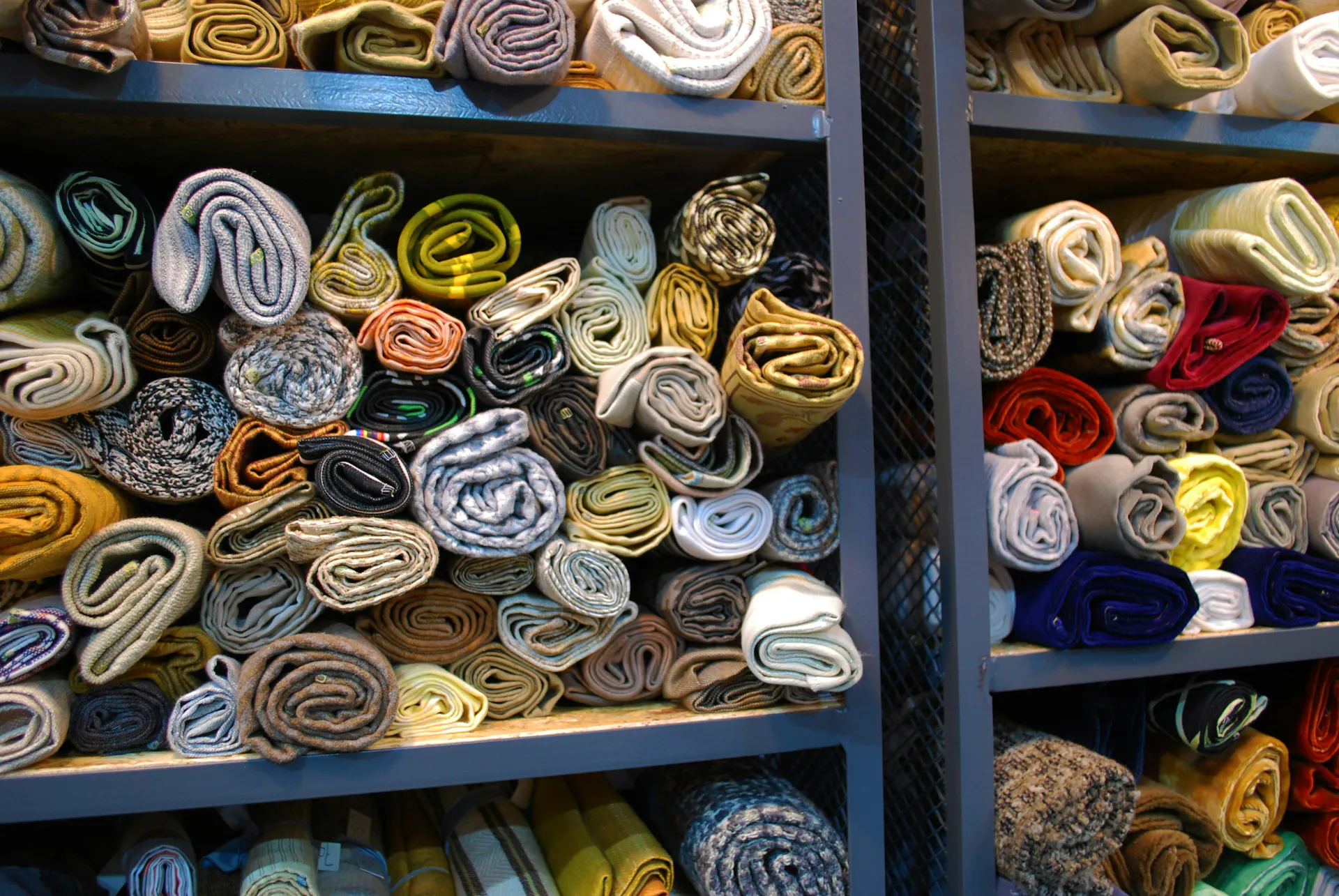
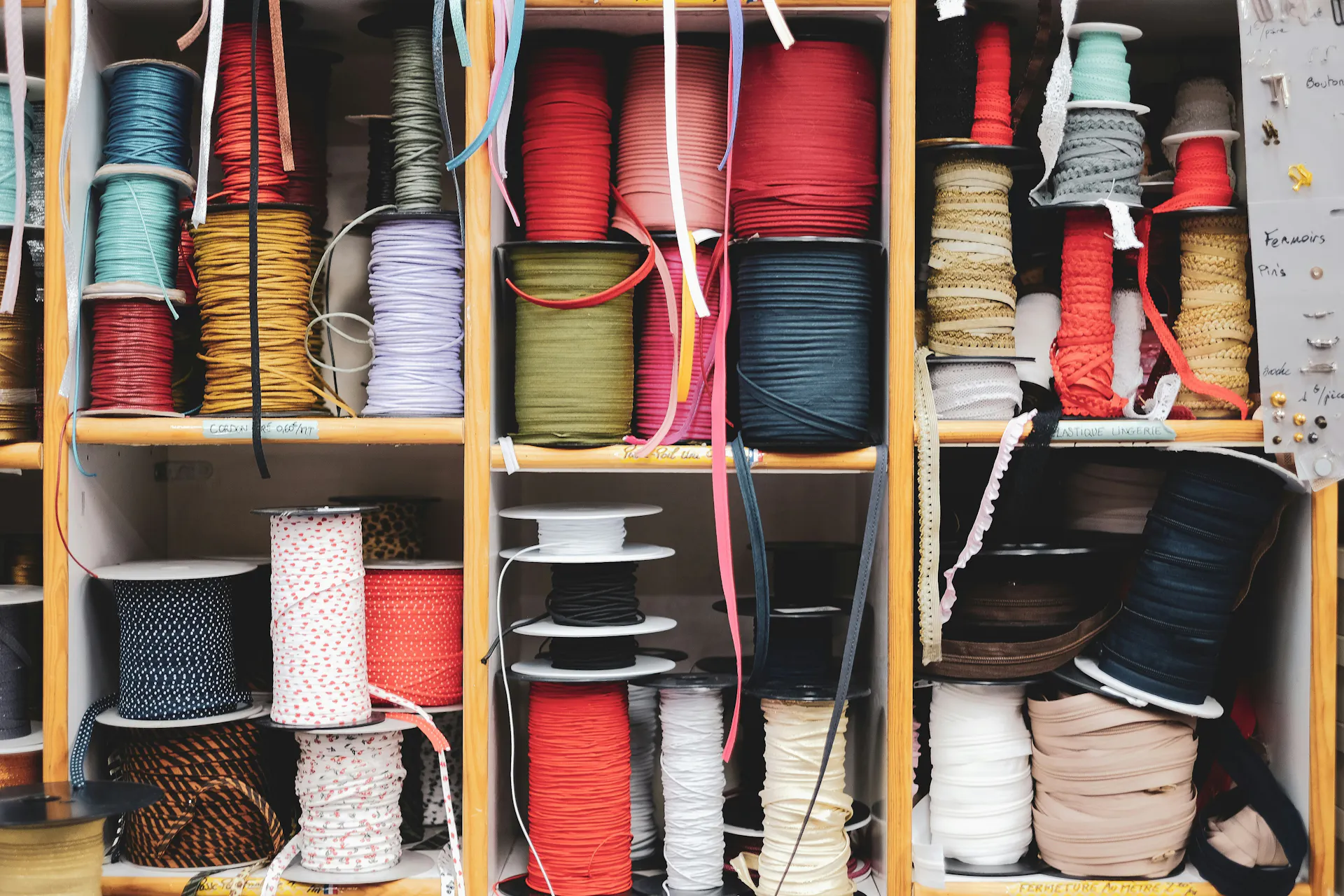
Fabric does best folded and stored upright in clear bins or on open shelves, where you can see colors and pull a bolt without unstacking everything. Keep thread, needles, and notions in labeled containers so small items don't disappear into the bottom of a box. Store fabric off the floor and away from direct light, as it fades in color over time. A rolling cart for works in progress makes it easy to move a project between the unit and home without repacking it. If you sell finished apparel, a garment rack keeps pieces wrinkle-free and ready for photography or shipment.
Paper crafters handle high volume in a small footprint. Vertical paper holders, stackable drawer units, and flat file bins keep sheets from bending or curling at the corners. Sort by color or collection to grab what you need fast. Stamps, dies, and ink pads stay in the best shape in shallow drawers where they lie flat. Label every drawer, because paper crafts produce a lot of similar-looking supplies that are easy to mix up when you're working against a deadline.
Woodworking and other large-format hobbies need floor space and sturdy storage. Heavy power tools belong on solid shelving or a workbench, not stacked in sagging cardboard boxes. Lumber stores flat or on a simple rack to keep it from warping in changing weather. A ground-level unit makes loading sheet goods and equipment far easier, since you can park your vehicle right at the door and skip the stairs. Keep finishes and solvents in a separate, clearly marked container away from porous materials like fabric and paper. Hang hand tools on a pegboard or store them in a labeled chest so a missing piece is easy to spot.
Makers who work in small parts win or lose on organization. Beads, findings, and charms stay sortable in compartment cases and stackable trays, so a whole color story is one grab away. Candle and soap supplies like wax, wicks, and fragrance oils keep best in a cool spot away from the sun and heat, which can soften or separate them. Box finished products with a little cushioning so nothing chips or scratches before it ships. A small packing zone with mailers, labels, and tissue turns fulfillment into a quick, repeatable routine.
Climate-controlled units maintain a consistent temperature year-round, which protects the materials most crafts depend on. Fabric, paper, photos, and glues all react to heat and humidity. In a hot garage or a damp basement, paper warps and yellows, fabric grows musty, and adhesives dry out or break down. The Library of Congress recommends storing paper materials at a relative humidity between 30 and 50 percent to slow aging and prevent mold, and keeping conditions steady matters as much as the numbers themselves.
A climate-controlled storage unit holds a stable environment, so your inventory looks as good on shipping day as it did the moment you finished it. For Etsy sellers, that protection is part of your product quality and your reputation. A customer who opens a package to find faded cardstock or a musty scarf is the kind of customer who leaves the review you'd rather not read. Stable storage also saves you money, because materials you don't have to throw out and replace are materials you can still sell. For anything you plan to keep longer than a few weeks, climate control is worth the small added cost.
An organized unit only pays off if you can find and track what's inside it. Treat your craft storage unit like a small warehouse. A simple system keeps orders moving out the door and tells you when it's time to restock before a busy week catches you off guard.
Start by zoning the unit. Put raw materials in one area, works in progress in another, and packaged inventory ready to ship near the door. Then keep a running count with whatever tool you already use, whether that's a spreadsheet, a notes app, or your Etsy listing manager. The goal is a quick glance that tells you what's running low and what's overstocked.
A few habits make the biggest difference:
If your shop has grown into a steady volume, a commercial storage unit offers perks like wide aisles, free WiFi, and delivery acceptance, which help when supplies arrive while you're away. Month-to-month leasing means you can adjust your space as orders rise and fall throughout the year, so a holiday rush doesn't leave you scrambling and you're ready for peak season. And because our 2 Minute Move-In® lets you rent and access your unit the same day, you can scale up fast when a product suddenly takes off.
For Etsy and craft sellers, your hobby isn’t just something that you do to pass the time. It’s an extension of your personality and an extension of your livelihood. Instead of taking over countless rooms in your house, misplacing supplies, or potentially messing up an order, consider moving your shop to a storage unit for more space and extra peace of mind.
Ready to give your craft supplies the room they deserve? Find a StoreEase location near you and set up a space that grows with your shop, all on your own schedule.